
Performance Physical Therapy in Beaverton: A Complete Guide for Athletes and Active Adults
Double-click to edit...
You train hard, you care about how you move, and you expect more from your recovery than a few exercises and a heat pack. Maybe you are rebuilding after ACL surgery, managing a nagging knee on long runs, or losing distance because your hip and back will not cooperate. If you have tried generic physical therapy and still feel unfinished, you are not alone.
This guide explains what performance physical therapy is, how it differs from standard rehab, and what to expect when you work with Headquarters Physical Therapy in Beaverton. You will learn how testing, treatment, and progression fit together so you can return to your sport or active lifestyle with confidence, not just with less pain.
What Is Performance Physical Therapy and How Is It Different?
Performance physical therapy treats injuries and builds the strength, power, and movement quality your activity demands. Standard rehab often stops when you can walk, climb stairs, and perform daily tasks without pain. Performance care keeps going until you can sprint, cut, jump, lift, swing, or ride at the level you want.
That difference matters because pain relief alone does not mean a tissue is ready for the load of your sport. Research on ACL reconstruction, for example, has linked returning to sport without meeting strength and hop test criteria to a higher risk of reinjury. Performance physical therapy is built around closing that gap.
The Core Principles
Performance care rests on a few ideas that shape every session:
Objective data over guesswork. Measurements of force, symmetry, and movement quality guide decisions.
Progressive loading. Tissues are challenged in a planned way so they adapt and become more resilient.
Sport and activity specificity. Your program reflects what you actually do, whether that is running, cycling, golf, or field sports.
Prevention as a goal. Fixing the reason you got hurt lowers the chance it happens again.
Who Benefits From Performance Physical Therapy in Beaverton?
You do not need to be a professional athlete to benefit. Headquarters Physical Therapy works with competitive athletes and recreational adults who simply refuse to settle for less activity than they want.
Performance physical therapy is a strong fit if you are:
Recovering from surgery. This includes ACL reconstruction, meniscus repair, labral repair, and shoulder procedures.
A runner or cyclist. Overuse issues like runner's knee, IT band syndrome, Achilles tendinopathy, and shin splints often trace back to load and mechanics.
A golfer. Low back, hip, shoulder, and elbow pain frequently limit the swing.
Dealing with a chronic problem. Persistent tendon pain, hip impingement, or recurring back pain often needs a more thorough look.
Planning ahead. Prehab before a season or surgery can improve how you recover and perform.
If you are frustrated with rushed visits and cookie-cutter programs, this model was designed for you.
Why One-on-One Care With a Doctor of Physical Therapy Matters
At Headquarters Physical Therapy, you work directly with a Doctor of Physical Therapy for your entire session. You are never handed off to a tech or aide. The person who assesses you is the same person who adjusts your exercises, performs your hands-on treatment, and watches how you move in real time.
This matters for performance care because small details change outcomes. A slight shift in knee position during a landing, or a delay in glute activation during a step down, is easy to miss when attention is divided. Continuous one-on-one supervision allows immediate coaching and precise modifications.
This model keeps clinical decisions with your DPT. Your plan is shaped by your goals and your data, which is a major reason many athletes choose this approach.
How Objective Testing Guides Your Performance Care
Good programs start with good measurement. Headquarters Physical Therapy uses professional-grade technology to identify what is limiting you and to demonstrate when you have improved. You will not be told you are doing better without evidence.
Force and Strength Testing
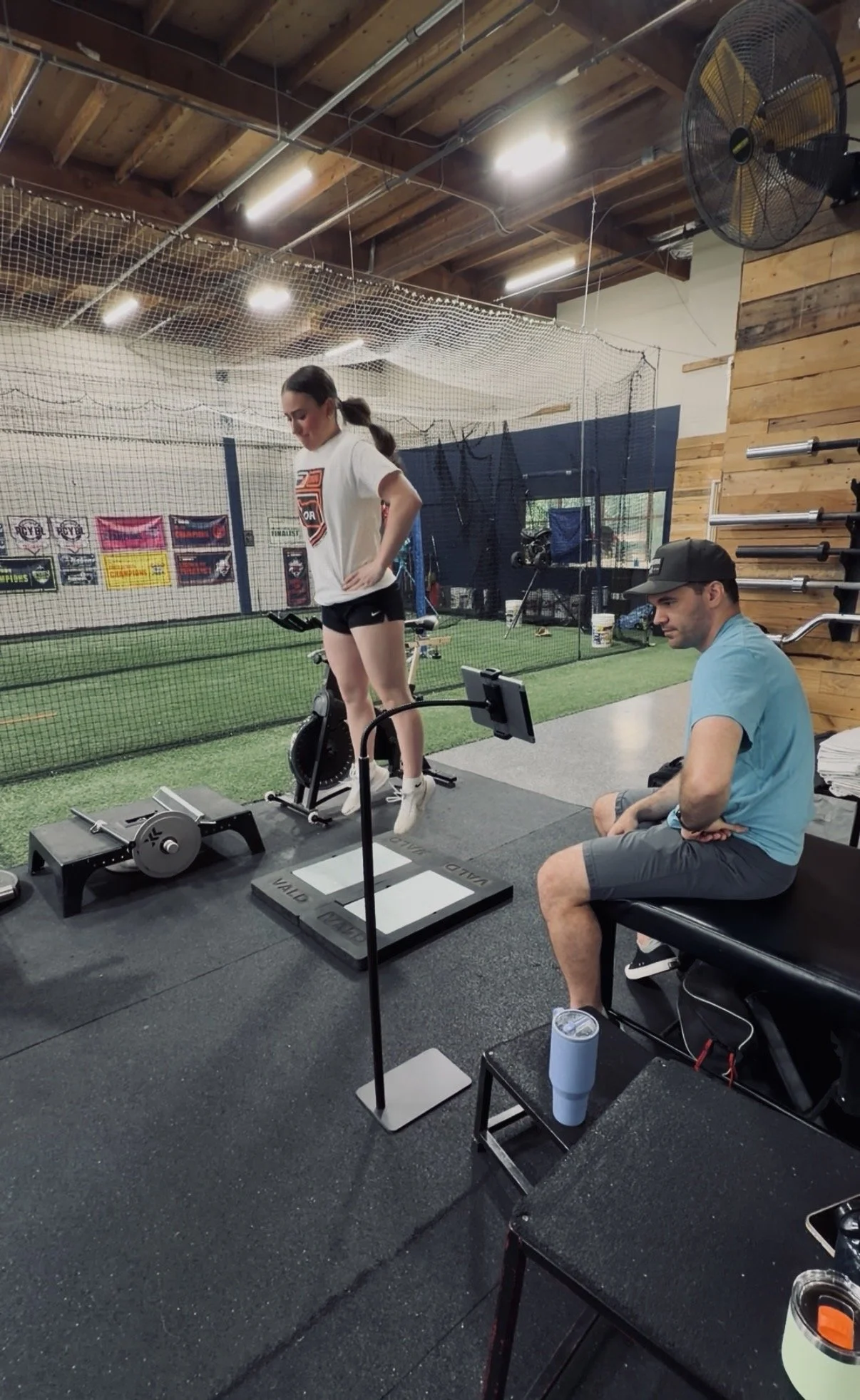
Force plate testing measures how you produce and absorb force during jumps and landings, and reveals differences between your left and right sides.
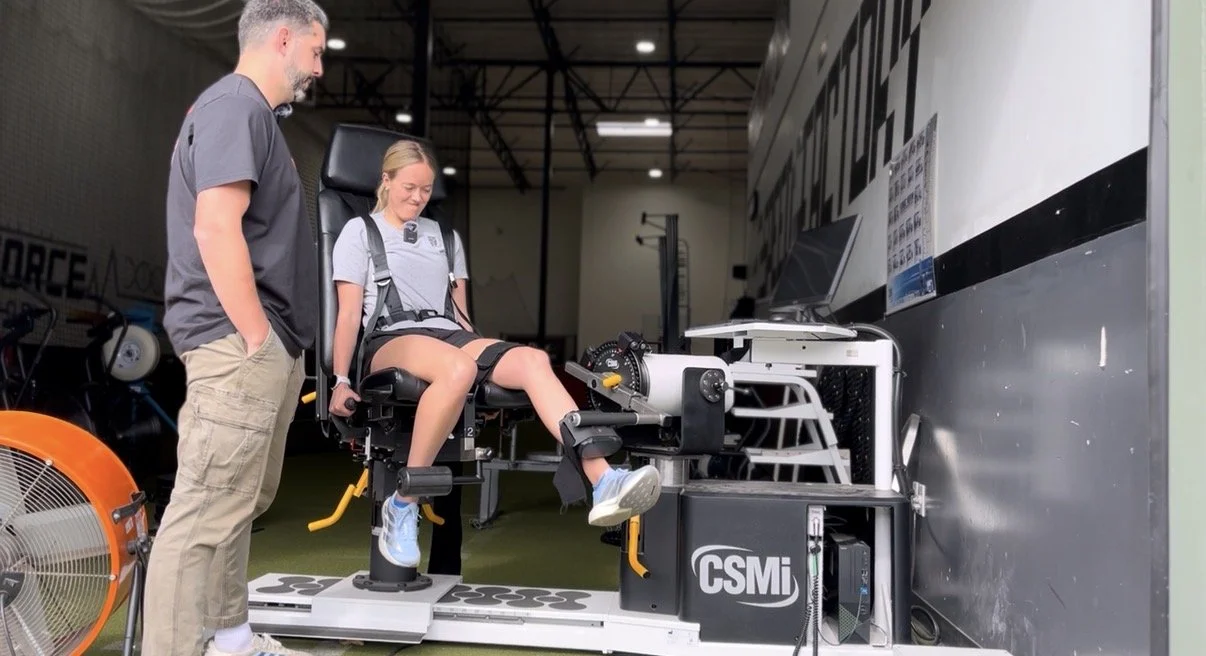
Isokinetic and dynamometer testing quantifies muscle strength through a controlled range of motion, which is especially useful for the knee and shoulder after injury or surgery.
VALD testing provides precise strength measurements that make it useful for tracking changes across visits.
Movement and Mechanics Assessment
Running gait analysis and running form assessment evaluate your stride, cadence, and loading patterns.
Functional movement assessment and movement screening identify mobility, stability, and control limitations.
Titleist Performance Institute (TPI) testing connects physical limitations to swing faults for golfers.
Bike fit aligns your position to your body so you can ride comfortably and efficiently.
Vestibulo-ocular reflex (VOR) testing supports care for people dealing with concussion symptoms.
Together, these tools turn vague complaints into a clear picture and a concrete plan.
Criteria-Based Progression Instead of Calendar-Based Recovery
Many rehab plans move you forward because a certain number of weeks have passed. Bodies do not heal on a fixed schedule. Tissue healing, strength recovery, and confidence all vary from person to person.
Headquarters Physical Therapy uses criteria-based progression. You advance when objective data says you are ready, such as when you meet targets for strength, limb symmetry, movement quality, and tolerance to load. If you are not there yet, your program adjusts. If you are ahead, you are not held back by a calendar.
Why This Approach Protects You
Criteria-based progression protects you from two common problems. The first is moving too fast, which can overload a healing structure. The second is moving too slowly, which can leave you deconditioned and discouraged. Using objective benchmarks keeps your progress both safe and efficient.
Treatments and Training Methods Used in Performance Physical Therapy
Testing tells you what to fix. Treatment and training are how you fix it. Your plan draws from a range of evidence-informed methods selected for your specific needs.
Exercise-Based Care
Therapeutic exercise builds the strength, mobility, and endurance you need.
Strength and conditioning progresses you toward the demands of your sport.
Neuromuscular re-education retrains control and coordination, which is vital after injury or surgery.
Plyometrics and return-to-sport progressions prepare your body for jumping, landing, and quick changes of direction.
Blood flow restriction (BFR) training uses a specialized cuff to allow effective muscle training at lighter loads, which is valuable when heavy loading is not yet appropriate.
Hands-On and Supportive Care
Manual therapy, including joint mobilization, myofascial release, and soft tissue mobilization, helps reduce pain and improve motion.
IASTM (Graston), scraping, and cupping are soft tissue techniques used to address tight or sensitive areas.
Assisted stretching supports mobility and recovery.
Electrical stimulation (TENS and NMES) can help with pain modulation and muscle activation.
Breathwork and diaphragmatic training supports trunk control, relaxation, and efficient movement.
Yoga therapy builds mobility, balance, and body awareness.
Hands-on techniques are used to support your active work, not replace it. Lasting change comes from the strength and movement skills you build.
Return to Sport: Going Beyond Functional Discharge
Being able to walk without pain and complete daily tasks is called functional recovery. It is an important milestone, but it is not the same as being ready for competition or high-intensity training. Many people are discharged at this stage and later struggle when they try to run, cut, or jump at full speed.
Headquarters Physical Therapy uses a full return-to-sport protocol that covers the demands athletes actually face:
Sprinting progressions to rebuild speed mechanics and tolerance.
Cutting and change-of-direction work to prepare joints for lateral and rotational stress.
Jumping and landing training to restore power and landing control.
A complete return-to-sport test battery that measures strength, symmetry, power, and movement quality against objective criteria.
This is especially important for ACL surgery patients. Research published in the British Journal of Sports Medicine found that delaying return to sport until nine months after ACL reconstruction, and passing return-to-sport criteria, was associated with a substantially lower reinjury rate. Testing and criteria help you make that decision with data, not hope.
Return-to-sport testing is also valuable for people recovering from hamstring strains, ankle sprains, groin pain, and other injuries where reinjury is a real concern.
Conditions and Goals We Support for Active People in Beaverton
Performance physical therapy applies to a wide range of musculoskeletal problems. Headquarters Physical Therapy treats conditions such as:
Spine: low back pain, sciatica, neck pain, and mid back pain.
Shoulder and upper extremity: rotator cuff pain or tear, shoulder impingement, frozen shoulder, tennis elbow, golfer's elbow, and wrist pain.
Hip and knee: hip pain, hip impingement (FAI), labral tears, knee pain, runner's knee, meniscus injuries, IT band syndrome, and ACL injury.
Lower leg and foot: hamstring strain, groin pain, Achilles tendinopathy, plantar fasciitis, ankle sprains, and shin splints.
Head: headaches, migraines, and concussion symptoms, supported by concussion and vestibular therapy.
General concerns: arthritis, tendinopathy, and overuse injuries.
Your goals matter as much as your diagnosis. Common outcomes include returning to sport, returning to running, building strength, improving mobility, preventing injury, improving balance, correcting posture, and supporting desk workers who need better ergonomic habits.
Programs for Runners, Golfers, and Cyclists
If you run, your plan may include running gait analysis, strength work for the hips and calves, and a gradual return-to-running progression. If you golf, TPI testing helps link your physical limitations to your swing so rehab and training support your game. Cyclists can combine physical therapy with a bike fit to address discomfort and improve efficiency.
Nutrition Coaching
Recovery and performance depend on how well you fuel your body. Nutrition coaching complements your physical therapy by supporting energy, tissue repair, and training adaptation.
Collaborative Care and the HQ PT Movement Prescription
Your recovery works best when everyone involved is on the same page. If you are working with a surgeon, Headquarters Physical Therapy communicates directly with them and provides objective milestone reports. Your surgeon sees measurable progress, and your care stays coordinated.
At every visit, you also receive an individualized movement prescription outlining exactly what to do between sessions. This keeps your progress moving and gives you clarity about your next steps so the work you do in the clinic carries over into your daily life and training.
You can explore the full range of offerings on the Headquarters Physical Therapy Services page.
Start Your Performance Physical Therapy in Beaverton
You should not have to choose between feeling better and performing better. With one-on-one care from a Doctor of Physical Therapy, objective testing, criteria-based progression, and a complete return-to-sport process, you can rebuild with a clear path and measurable results.
If you are ready to move beyond generic rehab, book an appointment with Headquarters Physical Therapy in Beaverton today. Visit the Headquarters Physical Therapy home page to get started, or browse the HQ PT Blog for more guidance on injury recovery and athletic performance. Your next level of movement starts with a single visit.