RUNNING at hqpt
Runners get ready to experience the HQPT difference.
Next gen approach to running PT, the future is here.
For years, the HQPT team has worked with runners ranging from elite pros to recreational weekend warriors. We’ve found most running injuries don’t come out of nowhere — they build over countless miles of the same movement pattern, the same asymmetry, the same overload. Fixing the pain without finding the pattern is how runners end up injured again next season. At HQPT, every running assessment starts with objective data, so we treat the cause — not just the sore spot.
What Makes HQPT Running PT Different
Plenty of clinics offer a “gait analysis” that amounts to a clinician watching you jog on a treadmill. We think your running deserves the same rigor as a pro athlete’s. That’s why every runner at HQPT is tested — objectively, repeatably, and in ways you can see for yourself.


Model Health 3D Motion Capture
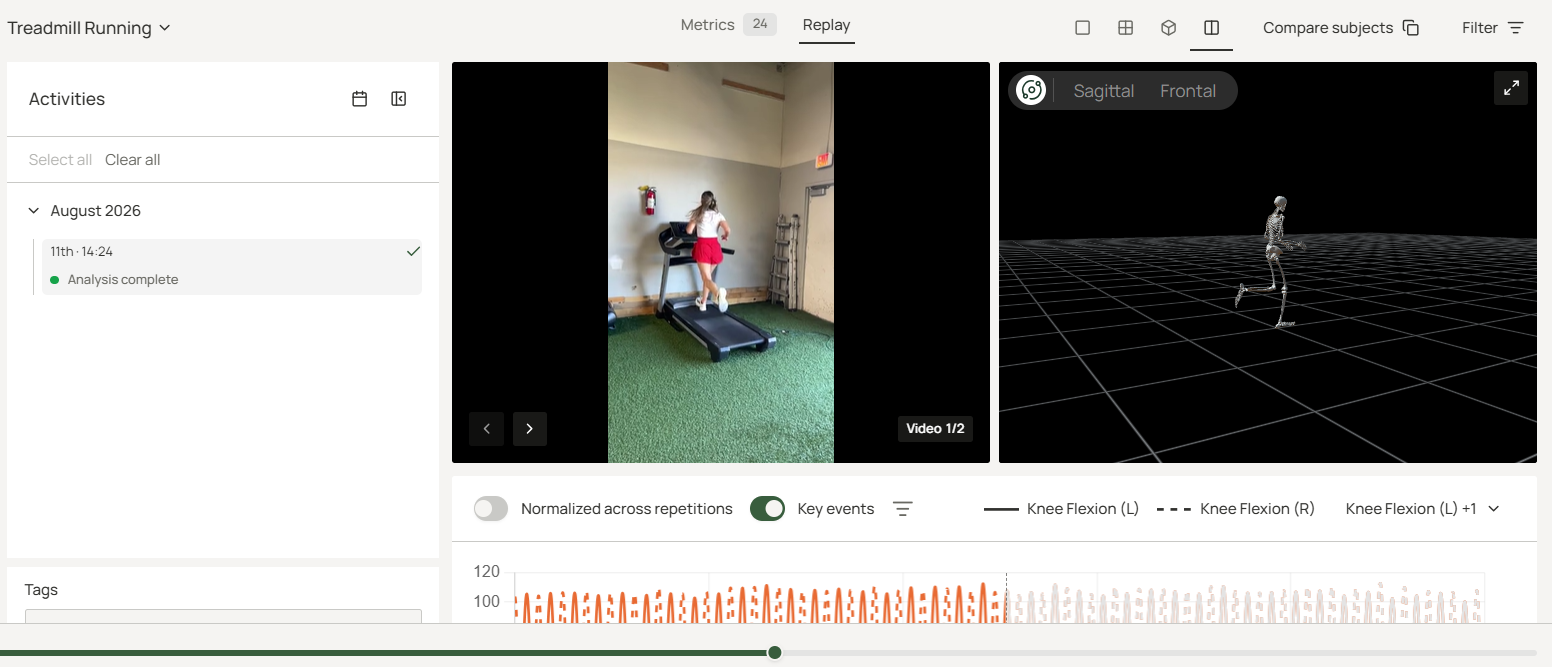
We use Model Health, a markerless 3D motion capture system built on technology developed at Stanford University, to turn your running stride into lab-grade biomechanical data — no sensors, no suits, no motion-capture lab. In minutes, we can measure your joint angles through every phase of your stride and spot the patterns that drive injury: overstriding, hip drop, excessive trunk lean, limited hip extension, and side-to-side differences you’d never catch by eye. And because the testing is fast and repeatable, we don’t just tell you your mechanics improved — we retest and show you.
VALD ForceDecks
Running is essentially a series of single-leg hops — thousands of them per mile. Our VALD ForceDecks force plates measure exactly how much force each leg can produce and absorb, and how quickly. That reveals the strength and power asymmetries hiding underneath your stride — often the real reason one Achilles, one knee, or one hip keeps flaring up. We use your numbers to target the deficit, then retest to prove it’s closed.
Who We Help
From first-time 5K runners to Boston qualifiers and ultra athletes, we treat the full range of running injuries: runner’s knee, IT band syndrome, Achilles and other tendinopathies, plantar fasciitis, shin splints, and bone stress injuries — plus runners who aren’t injured yet and want to stay that way.
What to Expect
Every visit is one-on-one with a Doctor of Physical Therapy for the entire session. You’ll leave your first visit with your data, a clear explanation of what’s driving your symptoms, and a plan that keeps you running whenever possible — we modify training before we shut it down.